
Product
One catalogue. Many offers. The best three, first.
Suppliers never create products; they attach offers to a curated registry. Retailers compare the best three offers per product, ranked by price, rating and lead time, never by payment.
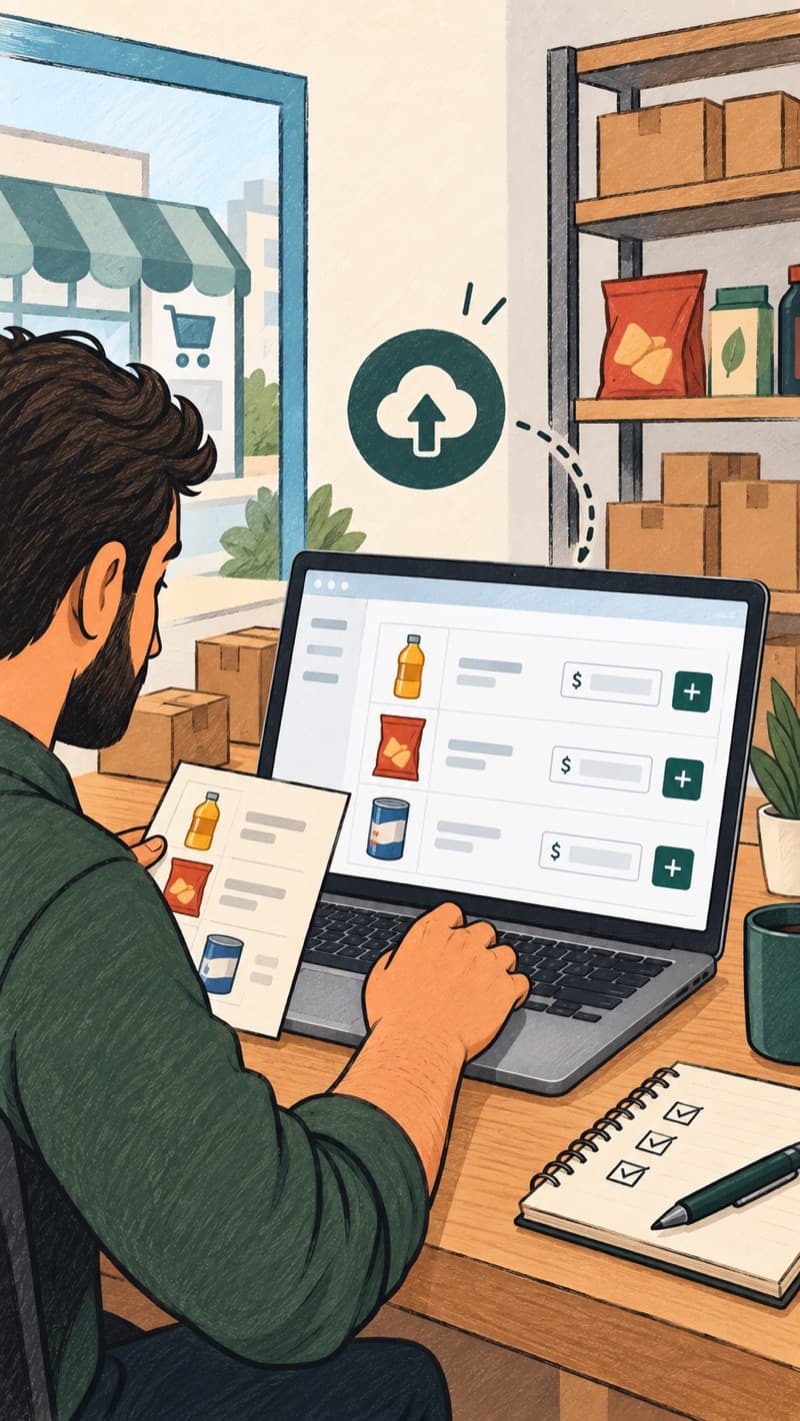
What the catalogue does
One record per product
Names in Arabic and English, barcodes and pack sizes, curated by the platform so the same laban is the same SKU for everyone.
Offers, not listings
A supplier attaches a price, minimum quantity, stock and lead time to a product. That is an offer.
Best three, ranked honestly
Retailers see the top three offers per product by price, rating and lead time. There is no paid placement.
Import by CSV
Upload your price list, preview every row and its match, then commit. Nothing goes live from a dry run.
How it works
1. The platform curates the registry.
New products are added and checked centrally; suppliers request a missing SKU rather than creating a duplicate.
2. Suppliers attach offers.
By CSV or one at a time, with per-retailer overrides on top.
3. Retailers reorder from it.
Last week's forty SKUs in two taps, each from the cheapest in-stock supplier, with an alert when a price moves.
On both sides
For the supplier
- Attach offers by CSV with a preview
- Stock and lead time per offer
- Per-retailer overrides on any offer
For the retailer
- The best three offers per product, ranked honestly
- Reorder last week in two taps
- Price-change alerts on what you buy
Browse by category
How each shelf behaves on the catalogue: the record, the offer, and who reorders it.
Three questions
What people ask about this first.
No. Ranking is price, rating and lead time only.
Request it with the barcode and pack size; the platform adds and checks it, then you attach your offer.
They see whether an offer is in stock and its lead time, not your quantities.
Where FMCG gets done.
Retailers sign up free. Suppliers apply, get verified, and start the 14-day Growth trial.